
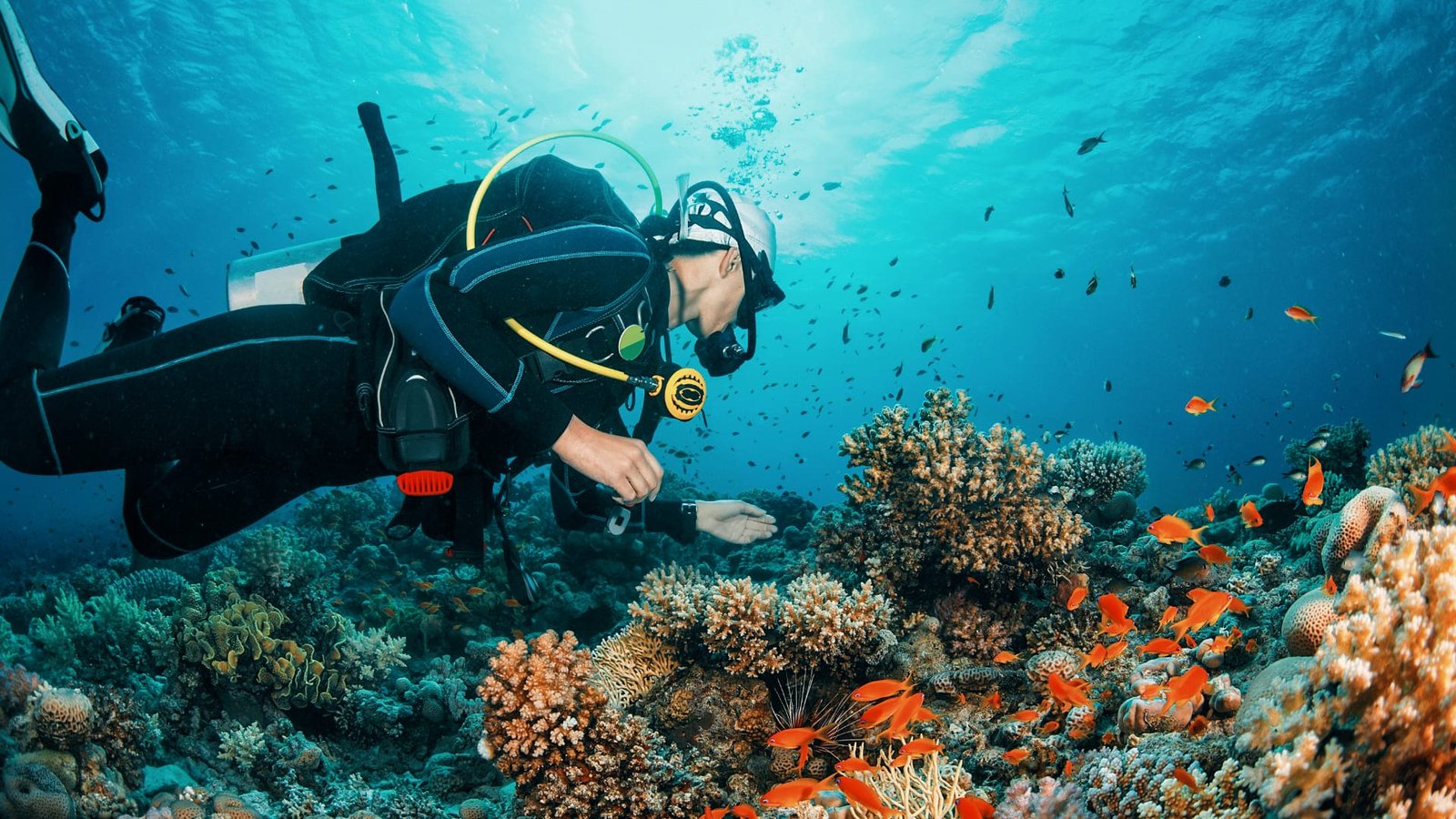
Batu Bolong is the dive most people remember from a Komodo trip. It is a single pinnacle in the channel between Komodo island and Tatawa, and only its tip breaks the surface. Everything that makes it extraordinary is underwater: the rock drops away as a near-vertical wall of hard and soft coral, and because the current splits around it, the sheltered face becomes a feeding station for an unusual density of fish.
Why Batu Bolong is dived on one side only
The channel funnels water past the pinnacle with real force. That current is what feeds the reef and keeps the coral in the condition it is in, but it also means the site is only dived on the lee side, and the safe side changes with the tide. Anchoring is not permitted here, so boats hold position and divers enter and exit directly.
This is why Batu Bolong is not a beginner dive. Divers need reliable buoyancy, a controlled descent, and the discipline to stay in the lee of the rock rather than drifting around the edge into the full flow.
What you see
The wall is thick with reef fish, and schooling surgeonfish and fusiliers gather in numbers that surprise even experienced divers. White-tip and grey reef sharks patrol the deeper section, giant trevally hunt along the drop, and turtles are common on the shallower shelf. The coral cover itself is the other attraction, and it is in better shape than most sites in the park.
Experience level
Advanced certification or equivalent logged experience in current is strongly recommended. If Komodo is your first liveaboard, we will usually build up to Batu Bolong across the first days of the trip rather than diving it on day one.
Conditions
Water temperature in central and north Komodo runs 26–30°C, generally warm and calm. A 3mm long wetsuit is the most versatile choice; bring a 5mm or a neoprene hoodie if you feel the cold. The Komodo season is June to September, departing from Labuan Bajo. Open Water divers are limited to a maximum depth of 18m by law and insurance.
Diving Batu Bolong with Teman
Batu Bolong features on our Komodo itineraries from 4 days upward. The KLM Teman carries 12 guests in 5 ensuite cabins with a crew of 10, which keeps group sizes small on a site where spacing matters.
More Komodo dive sites
See all itineraries and dates on our Komodo liveaboard page.

Ready to Start Planning?
Have More Questions?
Our team is ready to help you craft the perfect, safe, and unforgettable trip. Contact us today!