
The short answer: Advanced Open Water, or an equivalent such as CMAS 2-Star, is the level we ask for. But Open Water divers are not turned away, and it is worth understanding why the distinction matters more in Komodo than in most places.
Why Komodo raises the bar
Komodo’s best sites are current sites. Batu Bolong, Castle Rock, Crystal Rock and The Shotgun all depend on moving water, and that water does not negotiate. The certification level is really a proxy for two things: comfort being moved by something stronger than you are, and buoyancy control good enough that you are not fighting your own position while you do it.
If you hold Advanced Open Water
You may dive to 30 metres, in line with your certification. Divers with a deep specialty can go further, but only with the agreement of both the guide and the Cruise Director — that is not a formality, it depends on the site and the day.
If you hold Open Water only
You are welcome aboard, with two conditions. Your maximum depth is 18 metres, which is a legal and insurance limit rather than a house rule. And you will be supervised throughout. In practice this is less restrictive than it sounds: a great deal of Komodo’s best diving, including the manta channel at Karang Makassar, sits well within 18 metres.
Logged dives matter more than the card
We recommend around 30 logged dives in open water. A diver with an Advanced card and eight dives is usually less ready for Komodo than an Open Water diver with sixty. Recent experience counts too — if it has been three years, say so when you book rather than on day one.
Everyone does a check dive
Day one includes a check dive for every guest regardless of certification, usually somewhere sheltered like Sebayur Kecil. It is not a test to pass. It lets the dive team see your buoyancy and weighting, and it decides how quickly the week builds toward the harder sites. Briefings are mandatory before every dive.
What to do if you are unsure
Tell us your certification level, your total logged dives and when you last dived. We would rather plan the week around your actual experience than discover the gap in a current.
About the boat
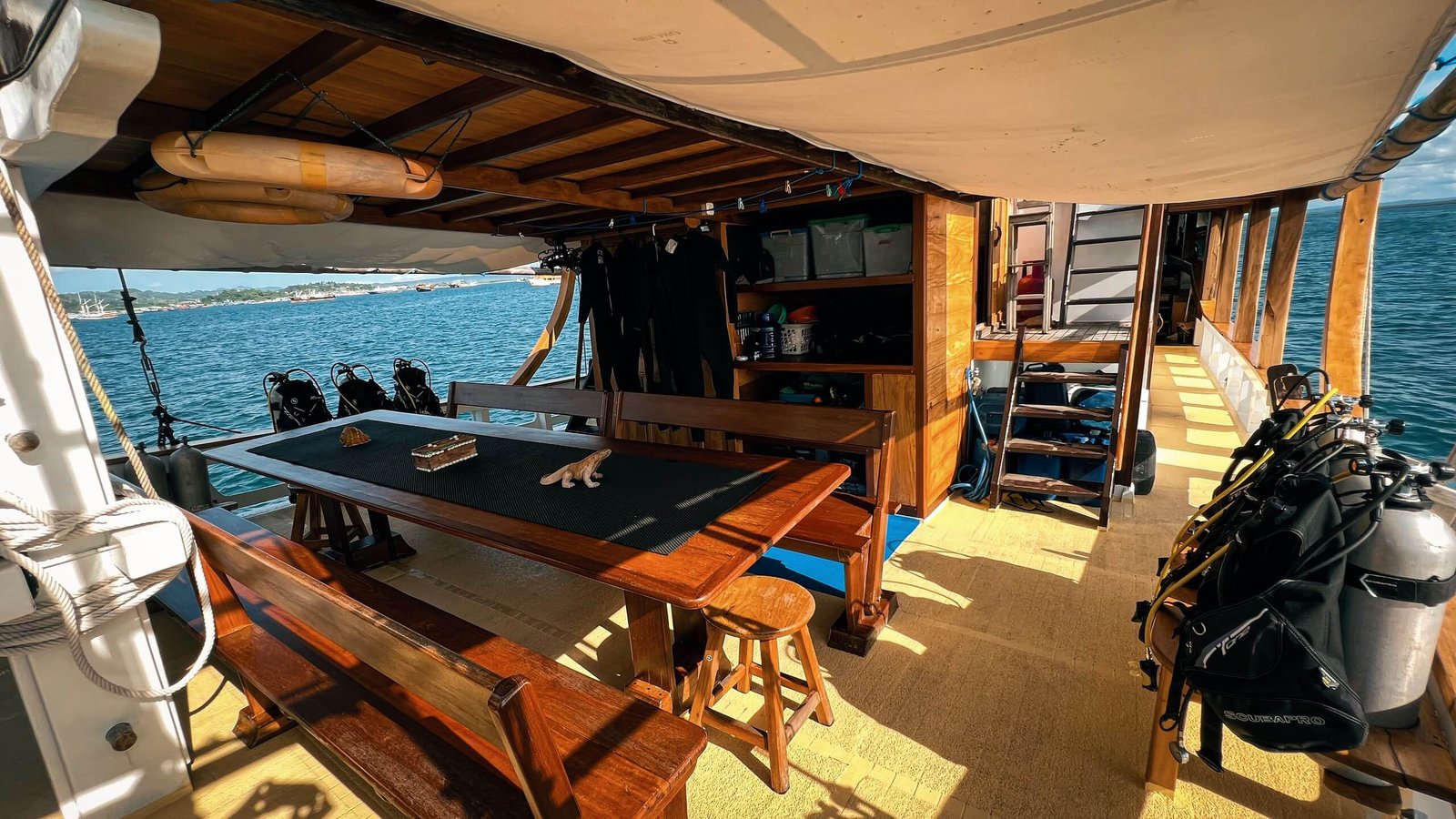
The KLM Teman is a 36-metre Indonesian phinisi carrying 12 guests in 5 ensuite cabins with a crew of 10 and a Cruise Director. See our full FAQ for booking and onboard detail.
Ready to Start Planning?
Have More Questions?
Our team is ready to help you craft the perfect, safe, and unforgettable trip. Contact us today!