

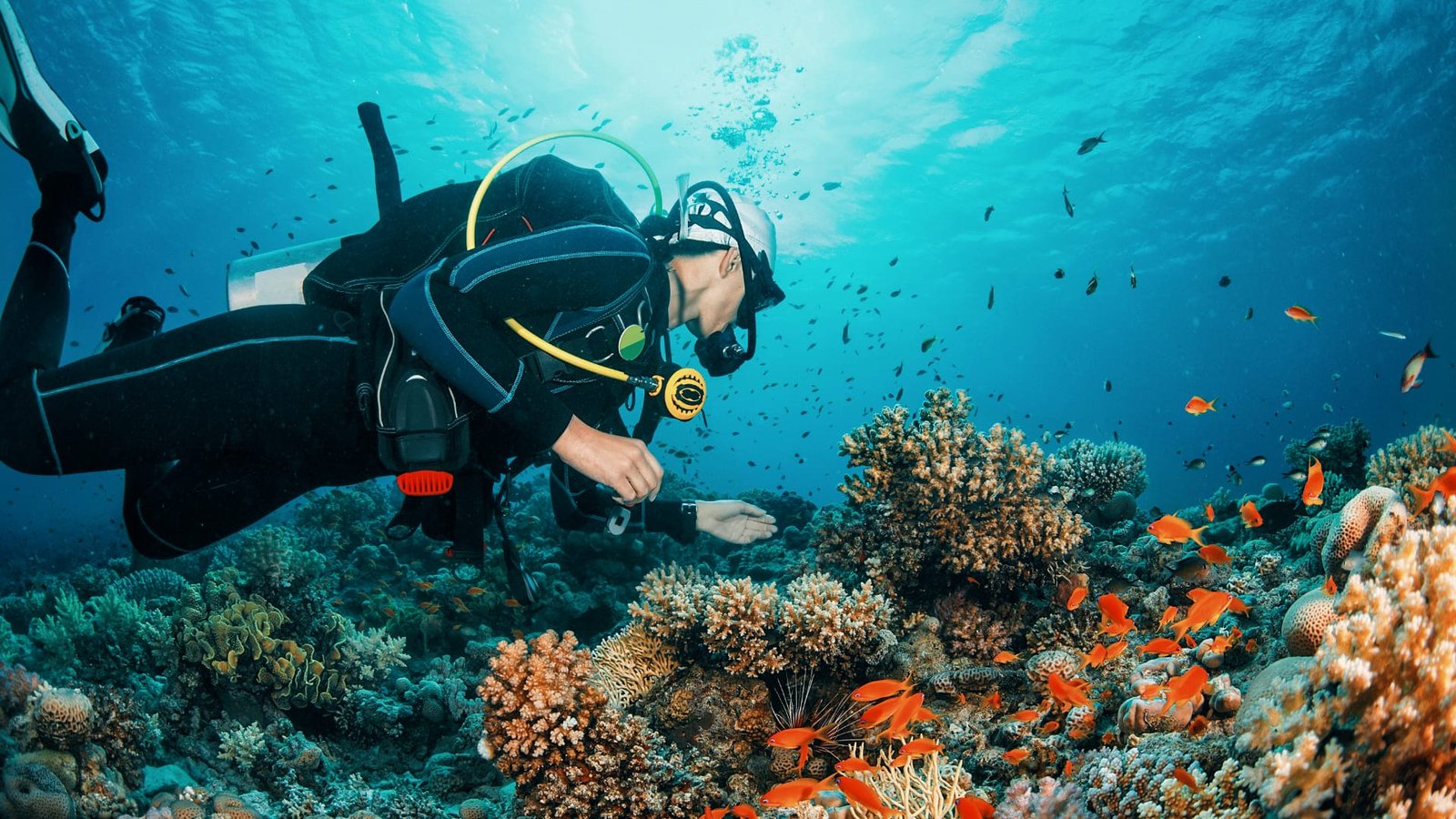
Cannibal Rock sits in Horseshoe Bay off Rinca, in the southern reaches of Komodo National Park, and it bears almost no resemblance to the diving in the north. The water is markedly colder, the visibility is often lower, and the appeal is entirely in the detail rather than the big animals.
Why south Komodo is different
Cold upwellings from the Indian Ocean feed this side of the park. That water suppresses temperature and loads the system with nutrients, which produces extraordinary invertebrate growth and a macro community you will not see in the northern channels. Divers who prefer critters over sharks ask for the south specifically.
What you see
Dense soft coral and sea apples, frogfish, pygmy seahorses, nudibranchs, zebra crabs on fire urchins, and unusually rich sponge growth. The rock itself is smothered in life from the shallows down.
Practical note
Because of the temperature difference, exposure protection suitable for the north is often not enough here. Southern Komodo also appears only on longer itineraries, since reaching Horseshoe Bay costs cruising time.
Experience level
Comfortable, experienced divers. Conditions can be surgy.
Conditions
South Komodo is measurably colder than the north: 24–26°C, caused by deep upwellings that also drive strong currents. That cold water is exactly why the invertebrate life here is so rich. A 3mm suit is not enough for most divers on repeat dives — bring a 5mm, and a neoprene hoodie if you feel the cold. Season is June to September from Labuan Bajo. Open Water divers are limited to 18m by law and insurance.
Visiting with Teman
The KLM Teman carries 12 guests in 5 ensuite cabins with a crew of 10. This stop features on our Komodo itineraries from 4 days upward.
More Komodo dive sites
See all itineraries and dates on our Komodo liveaboard page.

Ready to Start Planning?
Have More Questions?
Our team is ready to help you craft the perfect, safe, and unforgettable trip. Contact us today!